
Automation
Scan-on-Receipt: Accurate Batch & Expiry Tracking for Food and Grocery Distribution
本文以英文撰寫。
Introduction
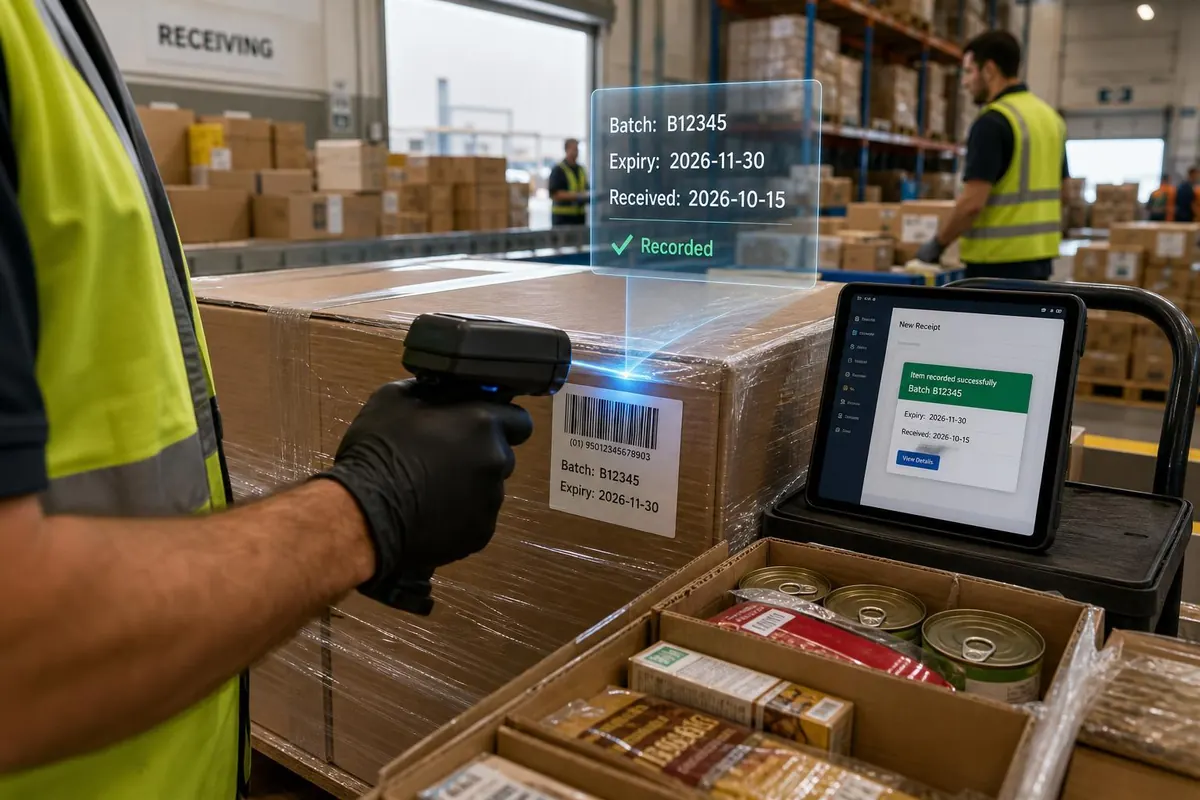
For small food and grocery distributors in British Columbia, accurate batch and expiry management is not optional. Scanning batch numbers and expiration dates at the moment of receipt — rather than filling them in later by hand — saves time, reduces waste, and makes recalls manageable. This article explains why real-time scanning at receiving is superior, how to design a practical receiving workflow, what tools and standards to use in BC, and how to estimate costs and return on investment. If you run a small distribution business, the procedures and examples below will help you build a reliable, low-cost system that protects your customers, improves inventory accuracy, and lowers operational risk.
Why scanning at receipt beats retroactive entry
Entering batch and expiry data after the fact creates gaps and errors. Deliveries are often processed in busy conditions, and relying on memory or paper notes leads to mis-keyed lot numbers, missing expiry dates, and delays in detecting short-dated stock. Scanning at receipt addresses these problems by:
- Capturing authoritative data: barcode or GS1 encoded lot and expiry fields reduce transcription errors.
- Enabling immediate quality checks: system flags near-expiry units on arrival so you can reject or reprioritize.
- Reducing labour and reconciliation time: one scan at receipt removes the need for later data entry and double checks.
- Improving recall readiness: complete, time-stamped lot records make tracebacks fast and defensible to regulators and customers.
For BC distributors who may need to demonstrate traceability to the Canadian Food Inspection Agency or local health authorities, precise data captured on arrival protects your business and your customers.
Designing a receiving workflow for batch and expiry capture
A practical receiving workflow keeps things simple for staff while ensuring full traceability. A robust process looks like this:
- Pre-receive: match the incoming ASN or supplier invoice to your purchase order in the system.
- Scan on unload: scan each pallet/carton or product barcode with a handheld scanner or smartphone app. Capture GTIN, lot/batch, expiry date, quantity, and supplier lot reference.
- Automated validation: software checks expiry windows (for example, rejects items with less than X days shelf life), verifies quantities against the PO, and flags mismatches.
- Label and store: if items arrive without clear internal labeling, print and apply your own barcode labels that include internal location and expiry for picking accuracy.
- Immediate posting: once validated, the system posts stock into the warehouse with lot-level traceability and timestamps; no manual back-entry needed.
- Ongoing rules: apply FIFO or FEFO (first expired, first out) logic in picking and set automated alerts for items that will expire in 30, 60, or 90 days.
Train receiving staff on a short SOP: scan first, then sign off. This single-step culture change is the core of consistent adoption.
Tools, standards and compliance for BC distributors
Choose tools that match your volume and budget. Key components:
- Hardware: basic options include consumer smartphones with a barcode scanning app (low cost), industrial handheld scanners for heavy use ($350 to $800 CAD), and label printers ($200 to $600 CAD).
- Software: choose inventory or warehouse software that supports lot-level tracking, expiry date fields, and mobile receiving. Cloud solutions often charge $25 to $200 per user per month depending on features.
- Barcoding standards: ask suppliers to provide GS1-compliant barcodes when possible. GS1 Application Identifiers encode GTIN (01), batch/lot (10), and expiry date (17). If suppliers do not provide these, capture the information manually and consider applying your own labels on receipt.
- Regulatory requirements: maintain records to satisfy federal traceability expectations (SFCR-style traceability for businesses dealing interprovincially) and provincial health inspections. Accurate time-stamped lot records at receipt will simplify any audit or recall process.
Practical tip: start with smartphone scanning and a cloud inventory backend. Move to dedicated hardware once volume justifies the investment.
Costs, ROI and practical next steps
Implementing scanning at receipt requires some upfront spend but typically pays back quickly through reduced shrink, labour savings, and fewer recall costs. Below is a sample cost and payback table for small distributors in BC.
| Scenario | Typical upfront cost (CAD) | Monthly SaaS/hardware costs (CAD) | Estimated annual savings | Payback (months) |
|---|---|---|---|---|
| Basic (smartphones + cloud app) | $500 | $50 | $1,800 (reduced shrink and labour) | 4 |
| Mid (handheld scanners + label printer) | $2,000 | $150 | $6,000 (less waste, faster receiving) | 4 |
| Advanced (integrated WMS + scanners) | $7,000 | $400 | $18,000 (efficiency, fewer recalls) | 5 |
Example ROI calculation: a distributor with $200,000 annual sales experiencing 3% shrink loses $6,000. By implementing scanning at receipt and tightening inventory practices, shrink can often drop to 1% or lower, saving $4,000 per year. Factor in labour savings for data entry and faster recalls and the total annual benefit may exceed $6,000.
Next steps:
- Run a one-week pilot where every incoming pallet is scanned at receipt and compare error rates and time spent to your current process.
- Create a short SOP and train receiving staff with a checklist: match PO, scan, validate, store.
- Ask top suppliers for GS1 data on their labels and negotiate clean labeling as part of purchase agreements.
Conclusion
For small food and grocery distributors in British Columbia, scanning batch and expiry information at the moment of receipt is a practical, cost-effective way to improve accuracy, lower waste, and make recalls manageable. By designing a simple receiving workflow that starts with scan-first practices, using affordable scanning hardware and cloud inventory systems, and leaning on GS1 labeling standards where possible, you can create complete, time-stamped lot records that protect your business and customers. Initial costs are modest and typically recouped within months through reduced shrink and labour savings. Start with a short pilot, train your team on clear SOPs, and scale the solution as your volume grows — you will see better inventory control and greater peace of mind.