
Introduction
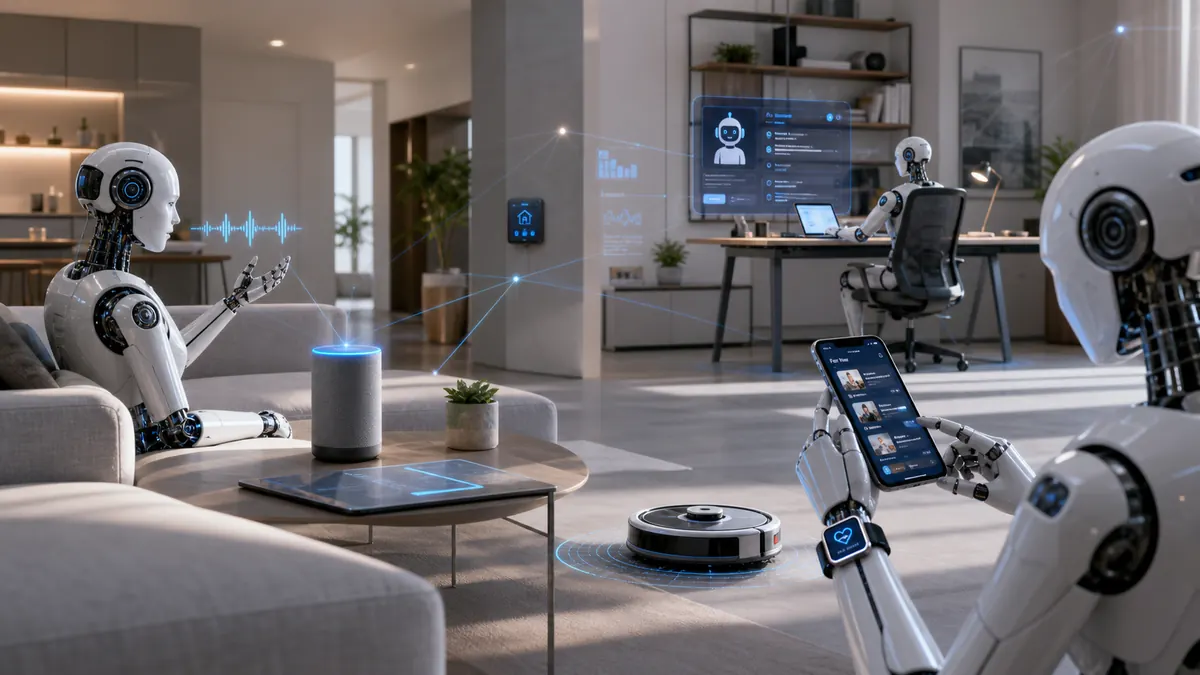
AI utilization in daily life has shifted from niche experiments to everyday tools that millions rely on. From suggestions that make shopping faster to background systems that optimize traffic flow, artificial intelligence now touches how we communicate, work, travel and care for our health. This article explores practical uses, the benefits people notice daily, and the trade-offs that come with convenience. Rather than focusing on technical theory, we examine clear examples and patterns so readers can see how AI fits into routines, how different domains reinforce one another, and what choices matter when adopting these technologies. The goal is to offer a grounded view of current AI use and practical guidance for using it responsibly.
Everyday productivity and communication
AI assistants, email triage tools and smart scheduling systems reduce friction in daily workflows. Virtual assistants handle reminders, calendar conflicts and quick searches; smart inboxes filter and prioritize messages; and writing assistants suggest tone, grammar and structure. These systems build on the same core capabilities: natural language understanding, pattern recognition and predictive models.
Key benefits include:
- Time savings: automated sorting and suggested replies shorten routine interactions.
- Consistency: templates and style suggestions help maintain a professional voice.
- Accessibility: voice control and transcription assist people with differing abilities.
At the same time, there are interlinked concerns: overreliance can degrade skill retention, and predictive shortcuts may introduce bias into who gets prioritized. Designing personal rules – for example, when to accept automated replies and when to write manually – preserves judgment while keeping productivity gains.
Homes, travel and mobility
Smart homes, navigation apps and ride-hailing services use AI to anticipate needs and optimize routes. Thermostats learn temperature preferences, lighting adapts to routines, and voice interfaces control appliances. In transportation, route predictions and dynamic pricing adjust to demand in real time, lowering wait times and improving asset utilization.
These systems are interconnected with productivity tools: calendar data can trigger travel alerts, and commuting recommendations influence when remote meetings are scheduled. Practical points to consider:
- Linking systems increases convenience but raises data-sharing and privacy questions.
- Redundancy planning helps when AI-driven services are unavailable.
- Manual overrides preserve control over automated decisions.
The following table compares typical domains, common uses, approximate benefits and primary risks to help prioritize adoption decisions.
| Domain | Common AI uses | Estimated benefit | Main risk |
|---|---|---|---|
| Productivity | Smart replies, scheduling, summarization | 20-40% time saved on routine tasks | Skill erosion, automation bias |
| Home | Thermostats, security, voice control | 10-30% energy or time savings | Privacy exposure, vendor lock-in |
| Mobility | Route optimization, demand prediction | 10-25% travel time reduction | Surge pricing, opaque decision rules |
| Health | Wearables, symptom checkers, reminders | Improved adherence, earlier alerts | False reassurance, data sensitivity |
Health, wellbeing and personal care
AI-enabled wearables track sleep, activity and heart rate to provide personalized recommendations. Telehealth platforms use triage models to prioritize appointments and guide follow-up actions. Mental health apps offer mood tracking and conversational agents for cognitive behavioral techniques. These tools can detect patterns that are hard to spot in everyday life and nudge healthier behavior.
Integration with other domains creates cumulative value: activity data can inform calendar planning and commute suggestions, while home sensors help detect emergencies. However, health applications raise stronger requirements for accuracy and privacy than many consumer services. Best practices include:
- Verify clinical validation for any diagnostic claim.
- Limit data sharing and use anonymized reports where possible.
- Combine AI insights with professional advice rather than replacing it.
Work, learning and commerce
In workplaces and classrooms, AI personalizes learning paths, automates repetitive processes and surfaces relevant content. Recommendation engines tailor ecommerce offers and media feeds, improving discovery and conversion. These systems accelerate skill acquisition by identifying gaps and suggesting targeted resources, and they streamline operations through intelligent automation.
Because these functions rely on continuous feedback, they evolve with user behavior: the more someone interacts with personalized learning, the better the recommendations become. That creates a positive loop but also a risk of narrowing exposure. To maintain a healthy balance:
- Use diverse content sources to avoid filter bubbles.
- Audit automated decisions that affect careers or finances.
- Encourage manual review for high-stakes outcomes.
Conclusion
AI utilization in daily life spans productivity, homes, mobility, health and commerce, forming an interconnected fabric that can make routines faster, safer and more tailored. Practical adoption means embracing automation where it reliably reduces friction while retaining human oversight for judgment-sensitive tasks. Key actions for responsible use include setting boundaries for automation, protecting sensitive data, and choosing validated tools for health and finance. Over time, the most beneficial AI integrations will be those that enhance human capability without eroding essential skills or privacy. By applying simple guardrails and staying attentive to how systems learn from our behavior, individuals can enjoy AI’s conveniences while managing the associated risks.