
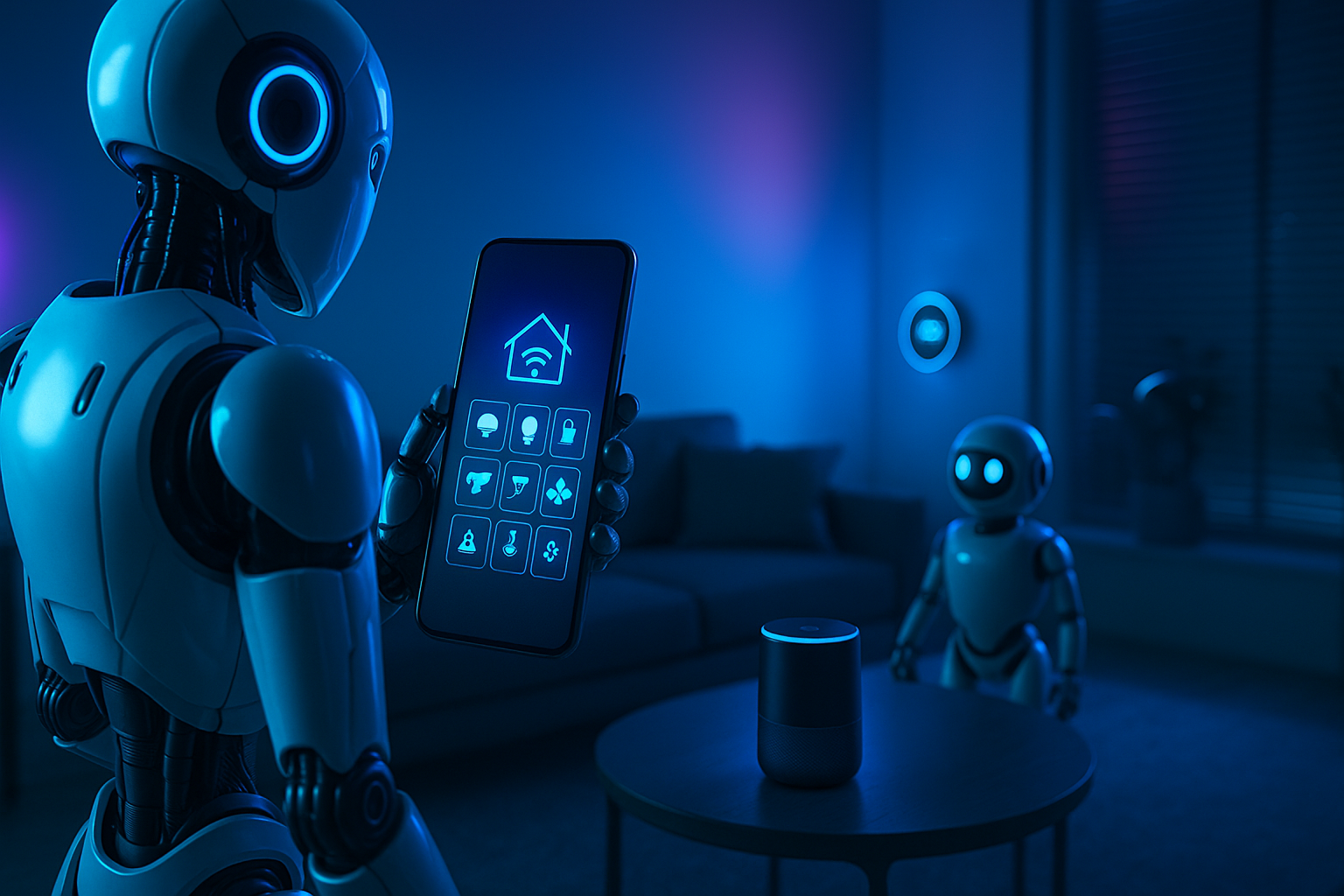
Home automation transforms ordinary houses into responsive, efficient and safer living spaces by connecting devices, sensors and services through software and networks. This article examines how home automation works, the main technologies driving it, practical planning steps for homeowners, and measurable benefits such as energy savings, improved security and accessibility. Readers will get a clear sense of device choices, protocol trade-offs and best practices for designing a reliable system that fits budget and lifestyle. Whether you are upgrading a single room or planning a whole-house implementation, the discussion below links technology selection to real use cases and maintenance considerations, helping you make informed decisions that balance convenience, privacy and long-term value.
Home automation overview
Home automation refers to the coordinated control of household devices—lighting, heating, locks, cameras, appliances and sensors—so they operate automatically or via user commands. At its core are three elements: devices that sense or act, a communication layer that connects them, and software that defines behavior. Modern systems range from single-purpose smart plugs controlled by a phone app to integrated platforms that combine voice control, geofencing, schedules and rules. The choice between cloud-dependent solutions and local processing affects latency, privacy and resilience. Understanding this structure helps you pick components that work together reliably rather than assembling a collection of isolated gadgets.
Key technologies and protocols
Selecting communication standards and protocols is one of the most consequential decisions because it determines compatibility, range and power consumption:
- Zigbee and Z-Wave: mesh networks optimized for low-power sensors and switches; they extend range through node-to-node relays and are widely used in professional smart homes.
- Wi-Fi: ubiquitous and high bandwidth, suitable for cameras and streaming devices but heavier on power and network load.
- Bluetooth Low Energy: good for proximity, locks and personal-device interactions; limited range without mesh extensions.
- Matter: an emerging interoperability standard designed to unify many ecosystems, simplifying device compatibility across brands.
Hubs or bridges often translate between protocols; cloud platforms provide remote access and voice assistant integration. When choosing, prioritize protocols that match the device type and power profile, and plan for a single control layer to avoid fragmentation.
Designing a connected system
Design starts with goals: do you want energy savings, enhanced security, better accessibility, or simply convenience? From that foundation, create zones (lighting, climate, security) and define primary control points such as a hub, voice assistant or local server. Pay attention to network capacity: Wi-Fi should have sufficient coverage and bandwidth, while Zigbee and Z-Wave require strategic placement to preserve mesh integrity. Security and privacy must be built in—use strong passwords, segment IoT devices on a separate VLAN where possible, and prefer devices with local control or encrypted cloud communication.
Budget for wiring and professional installation where required, especially for motorized blinds, hardwired security sensors and HVAC integrations. Also plan for firmware updates and a maintenance cycle so you avoid obsolescence and minimize security exposure over time.
Use cases and measurable benefits
When implemented with intent, home automation delivers measurable outcomes:
- Energy management: smart thermostats and lighting schedules reduce consumption without sacrificing comfort.
- Security and peace of mind: cameras, door sensors and automated routines deter intrusion and provide audit trails.
- Accessibility: voice control and automated routines aid people with mobility or cognitive challenges.
- Convenience: scene-based controls and presence-based automation remove repetitive tasks.
Below is a sample comparison to illustrate typical costs and payback for common components. Values are approximate and depend on local energy prices and installation complexity.
| Component | Average purchase cost | Typical annual energy savings | Estimated payback period |
|---|---|---|---|
| Smart thermostat | $150 – $300 | 8% – 15% of heating/cooling bill | 1 – 3 years |
| LED smart lighting (per fixture) | $20 – $60 | 30% – 50% vs incandescent | 1 – 2 years |
| Smart plugs (per outlet) | $15 – $40 | Varies; reduces standby load | 6 months – 2 years |
| Security camera (indoor/outdoor) | $50 – $250 | Indirect savings: theft deterrence | Not typically measured in energy payback |
Installation, maintenance and future trends
Installation can be DIY for many devices, but for whole-house systems consider a staged approach: start with the highest-value zones, validate integration, then expand. Regular maintenance includes firmware updates, battery replacements, and periodic checks of network performance. Expect ecosystems to converge around common standards such as Matter, reducing fragmentation and making devices easier to swap. Edge computing will grow, enabling faster local automations and improved privacy. Finally, homeowners should budget for lifecycle refreshes, since connectivity technologies and security expectations evolve faster than traditional construction elements.
Conclusion
Home automation is a practical pathway to greater comfort, efficiency and security when planned with clear objectives, sound technology choices and attention to integration. Start by defining what you want to achieve, then select protocols and devices that match those goals while prioritizing network design and privacy. Small, incremental deployments—smart thermostats, key lighting scenes, or a reliable security hub—deliver immediate value and help you iterate toward a whole-house strategy. Over time, interoperability improvements and edge-based intelligence will simplify management and reduce dependence on cloud services. With sensible planning and routine maintenance, home automation pays back through convenience, lower energy bills and a safer, more accessible home environment.