
Introduction
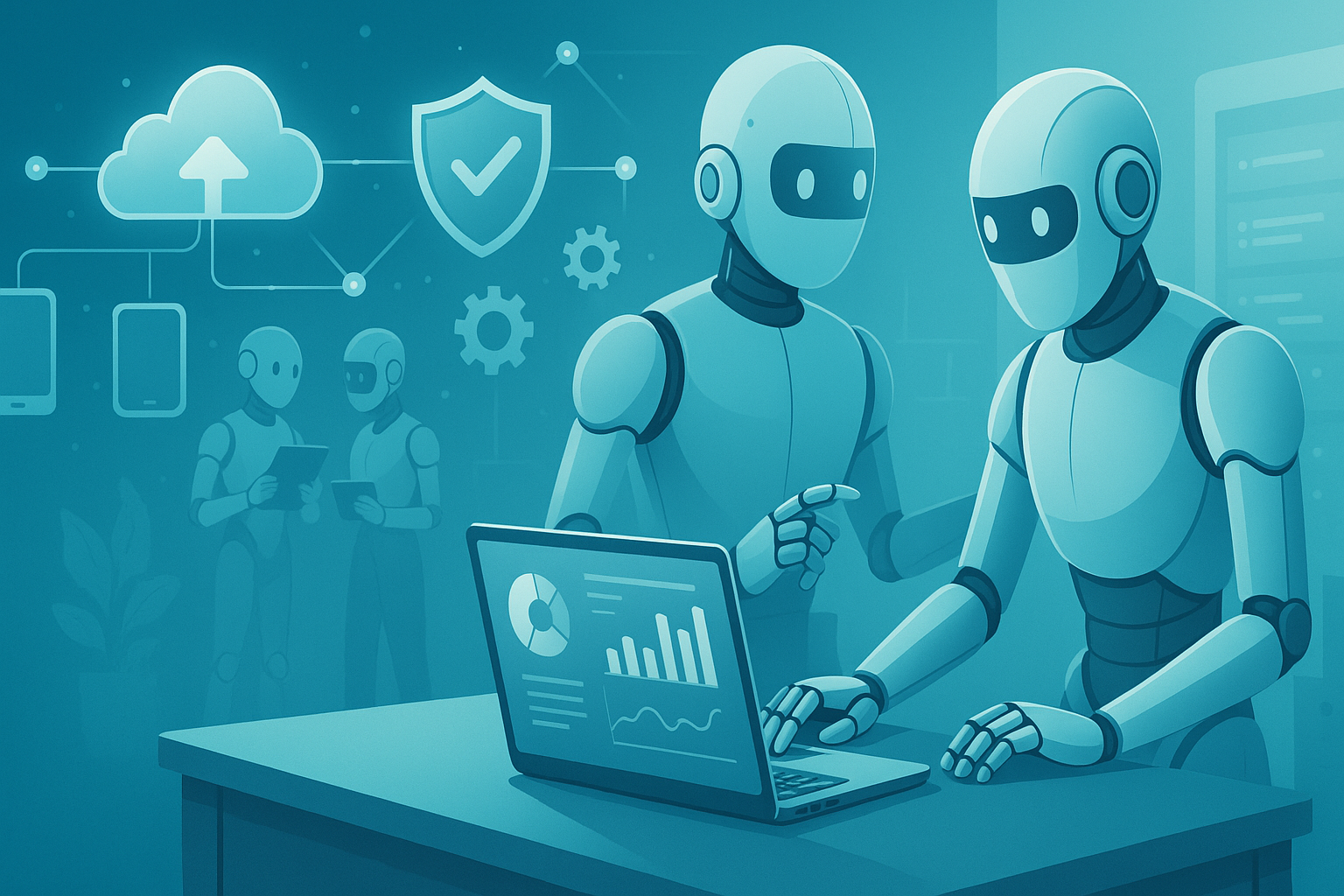
How IT can help your business explores the concrete ways technology transforms day-to-day operations, customer relationships, and strategic decision making. In the next sections I describe practical IT solutions—cloud services, automation, analytics, CRM/ERP, and cybersecurity—and show how they connect to improve efficiency, revenue, and resilience. You will see how operational changes support better customer experiences, how data and security underpin trust and insight, and how to plan and measure return on investment. This piece is written for leaders who need actionable guidance, not jargon: read on for clear examples, measurable outcomes, and a concise implementation path so you can prioritize the right IT moves for your business goals.
How technology can improve operations
Operational improvements are the starting point for most IT initiatives because they yield fast, visible benefits. Modern solutions reduce manual work, cut error rates, and increase throughput. Key approaches include:
- Cloud migration: Move workloads to cloud platforms to scale capacity, reduce capital expense, and simplify maintenance.
- Automation and orchestration: Use robotic process automation (RPA), workflow engines, and CI/CD pipelines to eliminate repetitive tasks and speed delivery.
- Integrated systems: Implement ERP, inventory management, and accounting integrations so data flows once and is reused across teams.
- Monitoring and SRE practices: Apply observability tools to detect issues before they impact customers and to measure system health.
When operations run reliably, teams can focus on growth activities. Faster internal processes also shorten time to market, which feeds into sales and customer satisfaction discussed next.
Improve customer experience and sales
Operational improvements create the foundation for better customer-facing systems. A smooth back end means quicker responses, accurate orders, and consistent service. IT directly boosts revenue through:
- CRM and personalization: Centralize customer data to personalize offers, automate follow-ups, and increase conversion rates.
- E-commerce and omnichannel: Ensure product availability, unified pricing, and consistent experience across web, mobile, and in-store.
- Chatbots and support automation: Combine self-service portals with human agents to reduce support costs while improving satisfaction.
- Marketing automation: Use targeted campaigns and A/B testing to improve lead quality and shorten sales cycles.
These revenue-focused tools depend on reliable operations and accurate data. For example, CRM-driven personalization requires the same integrated data flows created by operational systems.
Turn data into decisions and protect assets
Data is only valuable when it is trustworthy and actionable. IT enables decision making through analytics, while protecting the business with layered security.
- Business intelligence and analytics: Consolidate data into dashboards and predictive models to spot trends, forecast demand, and optimize pricing.
- Data governance: Define ownership, quality rules, and retention policies so analytics are reliable and compliant with regulations.
- Cybersecurity: Deploy multi-layer defenses: endpoint protection, network controls, identity and access management, and incident response plans.
- Privacy and compliance: Build processes to meet GDPR, CCPA, and sector-specific controls to avoid fines and customer trust erosion.
Analytics and security depend on the operational and customer systems described earlier. Secure, accurate data improves targeting, reduces fraud, and supports informed leadership decisions.
Plan implementation and measure return on investment
Successful IT projects follow a clear, prioritized roadmap. Start with high-impact, low-complexity initiatives, then expand. An outline:
- Assess: Map current systems, processes, and business objectives.
- Prioritize: Rank initiatives by value, risk, and effort—favor projects that reduce cost or increase revenue quickly.
- Pilot: Run small-scale pilots to validate assumptions and measure KPIs.
- Scale: Roll out proven solutions with change management and training.
- Measure: Track KPIs and adjust. Use continuous improvement cycles to refine processes.
Use quantitative KPIs to justify spend. Typical impact ranges seen across industries:
| Area | IT solution | Typical impact | Example KPI |
|---|---|---|---|
| Operations | Cloud + automation | 20-40% lower operating cost | Process cycle time, uptime |
| Sales | CRM + marketing automation | 10-30% higher lead conversion | Lead-to-customer rate, average order value |
| Decision making | Analytics and BI | Improved forecast accuracy by 15-25% | Forecast error, inventory turns |
| Risk | Security and governance | Reduced breach risk and faster recovery | Mean time to detect/respond, compliance incidents |
Small pilots with clear KPIs help estimate payback period. Typical payback can be under 12 months for process automation projects and 12-24 months for larger digital transformations.
Conclusion
IT is not an isolated cost center; it is a multiplier for efficiency, customer growth, and strategic insight. By improving operations through cloud and automation, businesses reduce friction and free resources. That foundation supports better customer experiences via CRM, omnichannel systems, and support automation, which in turn drives revenue. Reliable data and strong security create trust and enable confident decision making. Finally, a pragmatic implementation plan—assess, prioritize, pilot, scale, and measure—keeps investments aligned with business goals and delivers measurable returns. Start small, focus on high-impact areas, and use KPIs to expand. When done right, IT becomes a competitive advantage rather than an overhead.