
Introduction
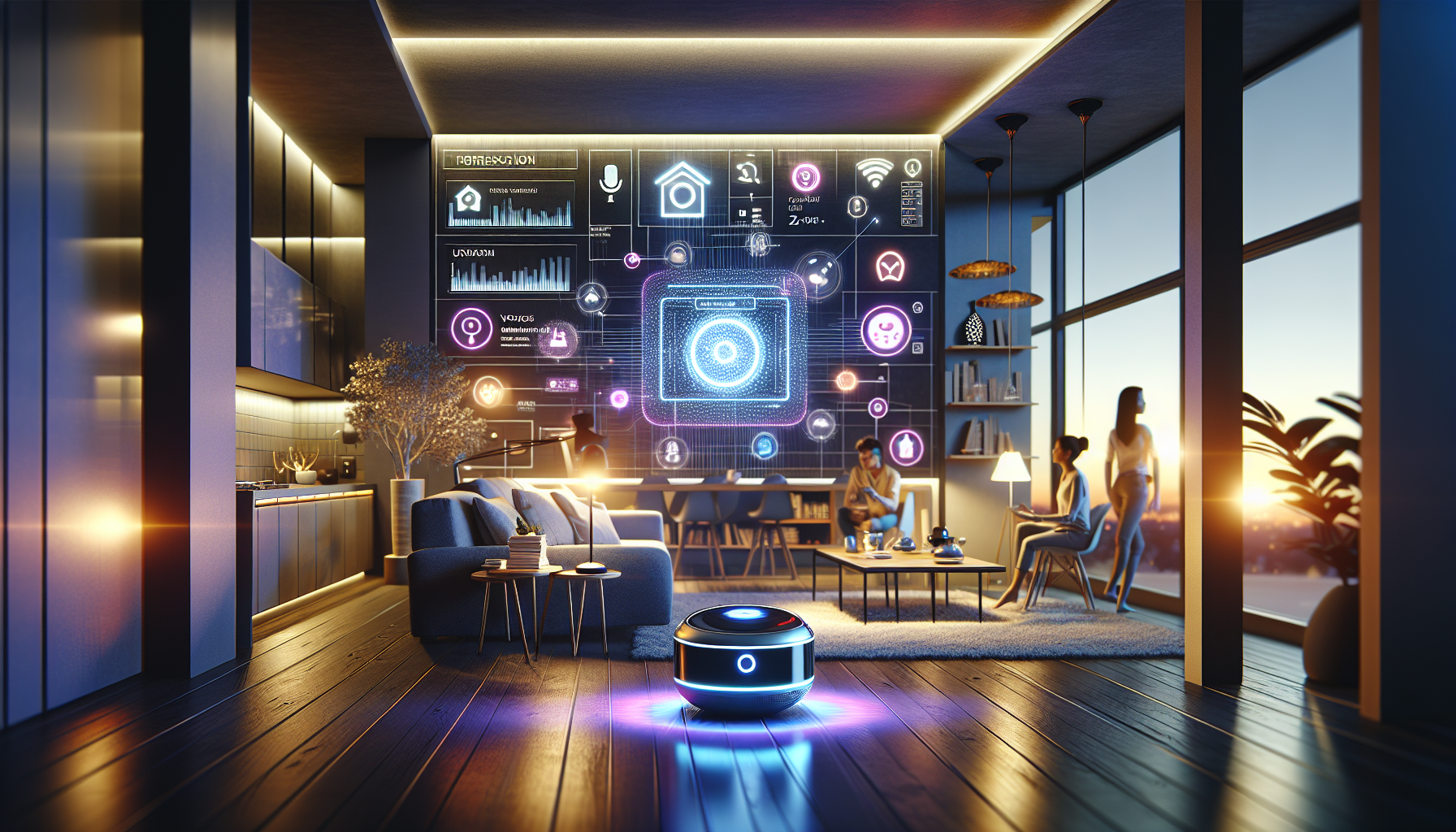
Smart home and AI describes how artificial intelligence is shifting connected homes from reactive systems into anticipatory, personalized environments. Over the next sections I will explain what modern smart homes are becoming, the core AI technologies that make this possible, practical benefits and use cases you can expect, and the privacy and implementation practices that keep these systems reliable and safe. You will see how data from sensors, voice interfaces, cameras, and appliance telemetry combine with cloud and edge models to automate routines, reduce energy use, and improve comfort. The goal is to give actionable insight for homeowners, integrators, and product teams so they can choose the right features and architecture for real-world results.
What smart homes are becoming
Smart homes are evolving from manual, app-driven controls to systems that learn occupants’ preferences and act proactively. Instead of switching lights on at a fixed time, a home uses motion, ambient light, calendar entries, and past behavior to decide whether illumination is needed. Thermostats adapt to local weather forecasts and occupancy predictions. Security systems move beyond simple rules to detect unusual patterns and reduce false alarms by correlating multiple sensors.
Key trends shaping this evolution include increasing device interoperability (Matter and standardized APIs), on-device inference (edge AI for latency and privacy), and hybrid cloud-edge models that balance compute cost and responsiveness. This shift changes how users interact: from explicit commands to brief prompts and occasional configuration, while continuous learning handles the details. The result is greater convenience, lower operational cost, and a more natural relationship between people and their environment.
Core AI technologies and how they work
Several AI components work together inside a smart home:
- Machine learning models: Supervised and reinforcement learning predict occupancy, temperature preferences, and appliance usage. Models can run in the cloud for heavy training and on-device for inference.
- Computer vision: Local image processing identifies objects and events (package delivery, pets vs humans) without sending raw video offsite, when designed for on-device inference.
- Natural language processing: Voice assistants use intent classification and dialog management to execute multi-step requests and integrate with third-party services.
- Anomaly detection: Unsupervised learning highlights equipment faults or atypical behavior (sudden water use, unusual HVAC strain) so owners or services can act early.
- Federated learning and personalization: Models update from decentralized device data to improve personalization while limiting raw data transfer.
These components are stitched together by orchestration layers that manage device discovery, event rules, model deployment, and user preferences so the house behaves as a coherent system rather than a set of isolated gadgets.
Practical benefits and use cases
AI-driven smart homes deliver measurable benefits across comfort, safety, energy, and maintenance. Common use cases include:
- Adaptive climate control: Reduces energy use by preconditioning rooms only when occupants are likely to be present.
- Predictive maintenance: Alerts for HVAC filter replacement or compressor inefficiencies before failures occur.
- Context-aware lighting and media: Lighting scenes and audio adjust based on activity (reading, cooking, entertaining) without manual selection.
- Security and safety: Smarter intrusion detection, smoke and CO correlation, and fall detection for seniors.
Below is a sample data table showing typical impacts and metrics you can expect from AI enhancements in a mid-sized home.
| Metric | Typical range | Timeframe to realize |
|---|---|---|
| Heating and cooling energy savings | 10% – 25% | 1 – 3 months (after tuning) |
| Reduction in false security alerts | 40% – 80% | Immediate to 1 month |
| Predictive maintenance lead time | 2 – 12 weeks earlier | Depends on equipment and sensors |
| User interaction reduction (less manual control) | 50% – 90% | 2 – 8 weeks |
Privacy, security and implementation best practices
As homes get smarter, risks increase unless mitigated. Best practices include:
- Edge-first processing: Keep sensitive data (audio, video) on-device and send only metadata or model updates to the cloud.
- Least-privilege integrations: Grant devices and services the minimum access needed and use short-lived credentials.
- Transparent user controls: Provide easy privacy settings, clear logs of data use, and simple ways to opt out of learning features.
- Secure update paths: Sign firmware and model updates, and validate installations to prevent supply-chain compromise.
From an implementation standpoint, pick platforms that support open standards to avoid vendor lock-in, design modular AI services for incremental rollout, and instrument the system to measure real-world outcomes so models can be improved responsibly.
Conclusion
AI is turning smart homes into anticipatory, efficient, and safer living spaces by combining sensor networks, edge inference, and cloud orchestration. Understanding the technology stack clarifies how learning models, computer vision, and natural language processing produce tangible benefits: lower energy bills, fewer false alerts, hands-off comfort, and earlier fault detection. Equally important are privacy and security choices that preserve trust: edge processing, minimal permissions, and transparent controls are essential. For homeowners and designers the practical path is incremental adoption—choose interoperable products, instrument results, and prioritize features with measurable returns. With thoughtful deployment, AI-enhanced smart homes deliver both convenience and operational savings while keeping user control front and center.