
Introduction
AI utilization in daily life has moved from experimental novelty to practical routine in just a few years. Today, algorithms quietly shape how we wake up, commute, shop, work and manage our health. This article explores concrete ways artificial intelligence appears in everyday settings, how it shifts habits and productivity, and what trade-offs users should consider. Rather than abstract predictions, the focus is on present-day tools and behaviors: voice assistants that reduce mundane tasks, intelligent scheduling and writing aids that speed work, diagnostic and wellness tools that personalize care, and navigation systems that transform mobility. Each section links to the next to show how the same core technologies—data, models and interfaces—are reconfigured across contexts to create cumulative value and new risks.
Smart living and personal assistants
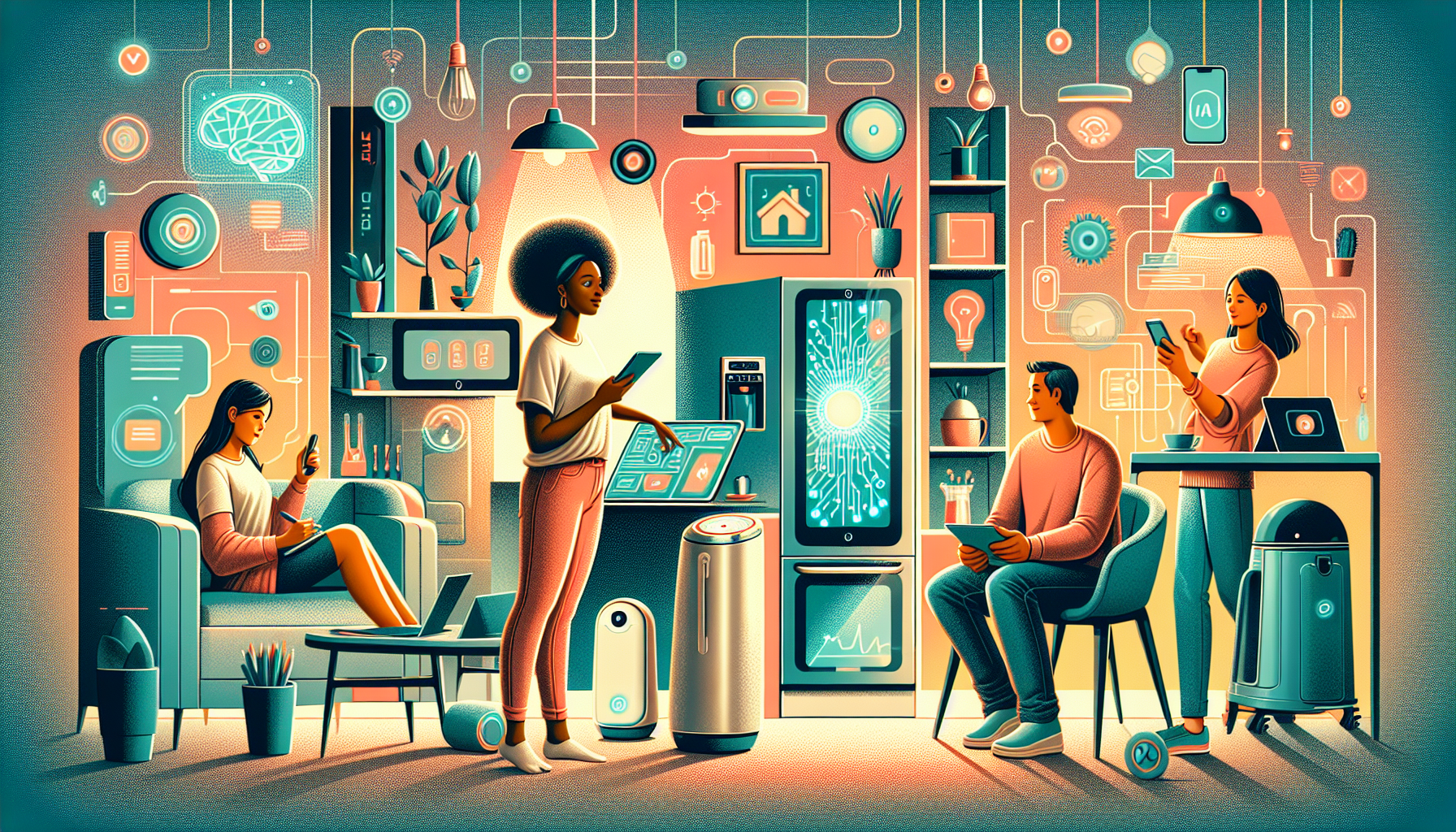
At home, AI orchestrates convenience. Voice assistants, smart thermostats and automated lighting learn routines and respond to natural language. Beyond simple commands, these systems apply pattern recognition: thermostats predict when you’ll be home and precondition rooms to save energy; refrigerators track groceries and suggest recipes based on what’s available.
- Practical benefits: reduced time on repetitive tasks, lower energy bills, and fewer grocery trips.
- Hidden value: contextual automation—integrating calendars, location and user preferences—lets devices act proactively (for example, starting a coffee maker when your morning alarm ends).
- Considerations: data privacy inside the home, correct configuration to avoid over-automation, and vendor lock-in when ecosystems don’t interoperate.
These home systems naturally feed into work and health environments because the same user profile and behavioral signals often inform productivity tools and wellness apps.
Work, productivity and creativity
AI-powered tools are reshaping professional workflows. Email prioritization, calendar assistants, code completion and writing aides reduce cognitive friction and free time for higher-level tasks. In creative fields, generative models assist with drafting, ideation, and prototyping.
- Efficiency gains: automated meeting summaries, intelligent search across documents, and task prioritization can save hours per week for knowledge workers.
- Creative augmentation: rapid iteration using generative tools shortens design cycles and expands concept exploration, while human oversight maintains direction and quality.
- Workforce impact: roles shift from execution to supervision of AI outputs; reskilling is essential for those whose routine tasks are automated.
Productivity AI often relies on data collected in personal spaces—calendar entries, email threads and device usage—so it ties back to smart-living systems and raises consistent questions about consent and data governance.
Health, safety and wellness
Healthcare and personal wellness applications are among the most impactful AI deployments. From sleep trackers that tune alarms to clinical decision support systems that flag abnormal scans, AI supports earlier detection and personalized interventions.
- Consumer wellness: apps provide tailored workout plans, nutrition suggestions and mental health check-ins using behavioral data and physiological signals.
- Clinical support: AI assists clinicians by triaging cases, highlighting anomalies in imaging, and predicting patient deterioration, improving response times and outcomes.
- Ethical and reliability issues: model bias, transparency of decision-making, and the need for rigorous validation in clinical contexts are critical constraints.
Health AI benefits from integration with personal devices and workplace records; seamless data flows enable richer insights but also heighten the stakes for secure handling and explainability.
Mobility, public services and learning
AI influences how people move, interact with public infrastructure, and learn. Navigation apps optimize routes in real time, while public transit systems use demand forecasting to adjust service. In education, adaptive learning platforms and automated grading tailor instruction to learner progress.
- Transportation advantages: reduced commute times, lower congestion, and improved safety through driver-assist features and predictive maintenance for fleets.
- Public services: chatbots and intelligent triage improve access to government information, but require careful design to avoid excluding low-digital-literacy users.
- Education: personalized practice, instant feedback and analytics help learners focus on gaps; teachers gain actionable insights without replacing human judgment.
These public-facing applications often reuse the same models and datasets seen in homes and workplaces, creating cross-domain effects such as improved route suggestions based on calendar data or personalized learning recommendations informed by workplace skill demands.
Snapshot of everyday AI use
| Application area | Common tools | Typical user benefit |
|---|---|---|
| Home automation | Voice assistants, smart thermostats, smart locks | Time saved on routines, energy reduction |
| Productivity | Scheduling assistants, email triage, text/code completion | Faster decision-making, hours saved per week |
| Health | Fitness apps, sleep trackers, diagnostic imaging AI | Personalized recommendations, earlier detection of issues |
| Mobility & public services | Navigation apps, transit demand forecasting, chatbots | Reduced travel time, improved access to information |
Conclusion
AI utilization in daily life is practical and pervasive: it simplifies routines at home, boosts productivity at work, personalizes health and education, and streamlines mobility and public services. The same technical building blocks—data collection, pattern recognition and model-driven decision-making—scale across contexts to create cumulative benefits. At the same time, recurring challenges persist: privacy, bias, explainability and the need for clear user controls. To get the most value, individuals and organizations should prioritize interoperable systems, transparent policies and literacy about what AI does and does not do. With thoughtful adoption and governance, AI can enhance everyday experiences while minimizing harm, leaving users more time for creative, social and meaningful activities.