
Introduction
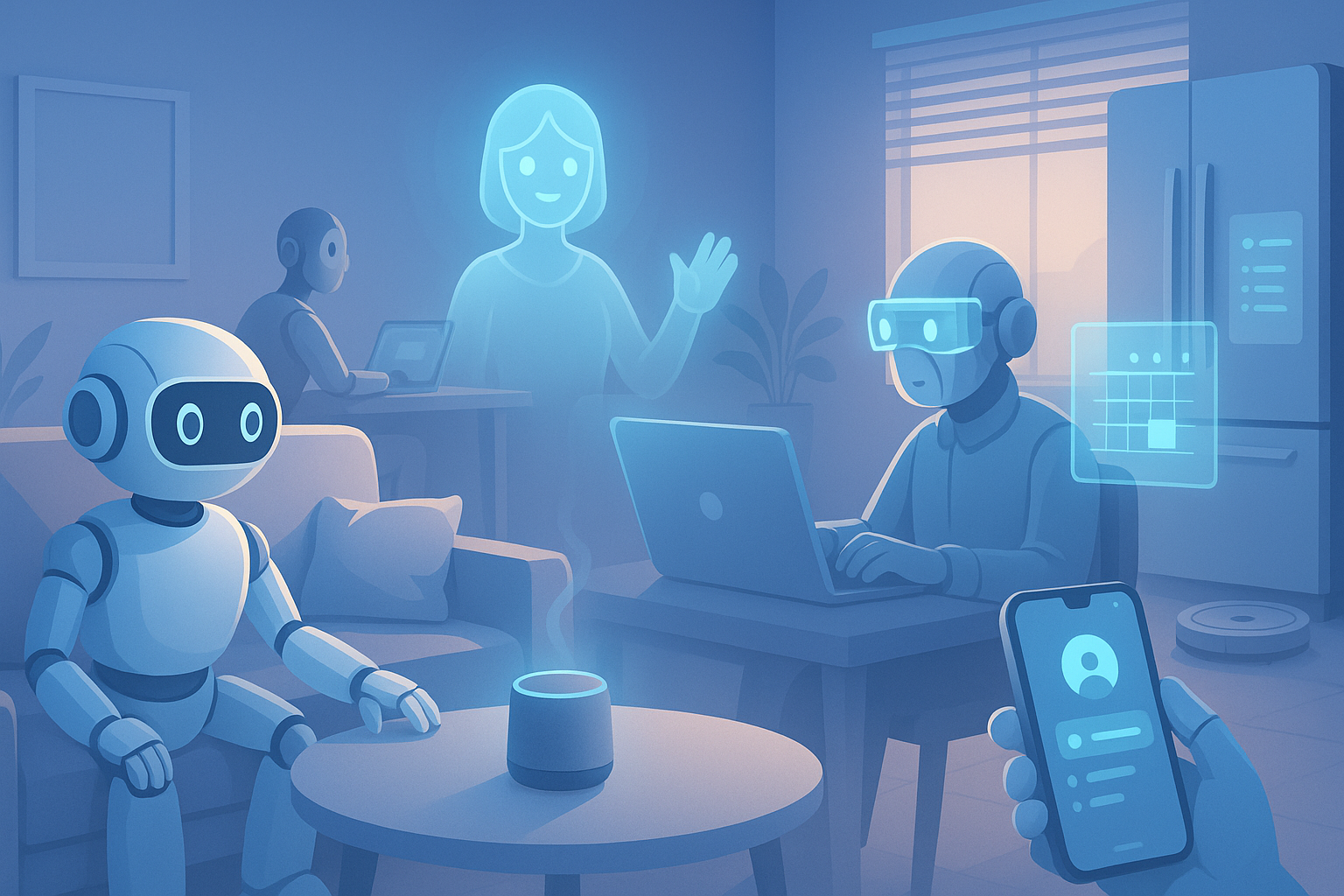
Artificial intelligence now touches many parts of everyday life, from the way we manage calendars to how cities move people and deliver services. This article explores practical uses of AI that most readers encounter, explains concrete benefits, and identifies trade-offs to consider. We will look at tools that boost personal productivity, smart home and lifestyle applications, health and wellbeing technologies, and how public systems and ethical concerns shape adoption. Each section builds on the previous one: better personal workflows make room for healthier habits; smart homes connect to sensors and health devices; public systems influence standards and privacy expectations. The goal is to give a clear, actionable view of AI utilization in daily life so you can make informed choices.
Personal productivity and work
AI-driven productivity tools have moved beyond novelty into daily utility. Intelligent email triage, meeting schedulers, and writing assistants reduce repetitive work and lower cognitive load. For example, automated summaries turn long threads into action items, while calendar assistants propose optimal meeting times based on preferences and priorities. In knowledge work, AI helps surface relevant documents, extract key points from reports, and suggest next steps. These features work better when combined: a writing assistant can draft a meeting agenda, the scheduler finds times, and the summarizer records takeaways for follow-up.
To get the most value, treat AI as a workflow component rather than a replacement. Define guardrails: set clear prompts, privacy settings, and review processes. Over time, models can be fine-tuned on personal style or company data to increase accuracy, but human oversight remains essential to catch errors and contextual nuances.
Everyday assistants and smart homes
At home, AI powers voice assistants, smart thermostats, security cameras, and entertainment personalization. These systems learn routines and adapt: thermostats anticipate heating needs, lighting automations follow sleep and wake cycles, and media services recommend content based on viewing patterns. Interoperability is improving, allowing different devices to coordinate—for instance, motion sensors trigger lights and adjust HVAC when you enter a room.
Practical setup tips include zoning automations for energy efficiency, centralizing device permissions, and scheduling maintenance notifications. The combined effect of small automations is significant: reducing energy waste, simplifying household tasks, and freeing time. Security matters: keep firmware updated, use strong passwords, and restrict device access to minimize the risk of data leakage or unauthorized control.
Health, fitness, and personal wellbeing
AI in health spans wearable sensors, personalized coaching apps, diagnostic aids, and telemedicine platforms. Wearables analyze heart rate variability, sleep stages, and activity to recommend tailored routines. On-demand telehealth uses AI to triage symptoms and route patients to the right clinician, shortening wait times. In diagnostics, machine learning helps interpret imaging and lab results, flagging anomalies for clinician review. Mental health apps use conversational agents to provide coping strategies, activity prompts, and mood tracking.
These systems work best when integrated: wearable trends feed coaching apps, which flag risks to clinicians for timely intervention. Privacy is crucial—health data should be encrypted, stored with clear consent, and shared only with trusted providers. Use AI as a complementary tool to professional care, not a standalone substitute for diagnosis in serious conditions.
Public services, mobility, and ethical considerations
AI adoption in public services and mobility shapes daily life on a community level. Traffic optimization, public transit scheduling, and predictive maintenance reduce delays and improve safety. Education platforms use adaptive learning to personalize lessons, helping students progress at their own pace. At the same time, these applications raise questions about bias, surveillance, and accountability. Data-driven systems can unintentionally reinforce inequities if training data or objectives are skewed.
Addressing these risks requires transparency, clear governance, and public participation. Policies that mandate audits, allow data portability, and enforce bias testing help preserve trust. As AI systems scale, collaboration between technologists, policymakers, and communities ensures benefits are shared and harms minimized.
Practical comparison: typical benefits
| Application | Typical user benefit | Estimated weekly time or cost impact |
|---|---|---|
| Email triage and summarization | Faster inbox management, clearer action items | 2 to 4 hours saved |
| Smart home energy management | Lower bills, improved comfort | 8 to 15 percent energy reduction |
| Wearables + coaching apps | Better adherence to fitness plans | 20 percent higher activity compliance |
| Traffic and transit optimization | Reduced commute times, fewer delays | 10 to 25 percent time savings for routes |
Conclusion
AI is already woven into daily routines—streamlining work, automating home tasks, supporting health, and shaping public services. The true value comes from thoughtful integration: combining tools so they complement rather than duplicate tasks, and setting boundaries that protect privacy and maintain human oversight. Practical benefits include time savings, energy efficiency, and improved access to care, but each comes with trade-offs around data governance and fairness. Moving forward, individuals and organizations should prioritize clear consent, transparent practices, and regular audits to ensure systems work as intended. By applying AI intentionally and responsibly, we can amplify productivity and wellbeing while minimizing unintended consequences.