
Introduction
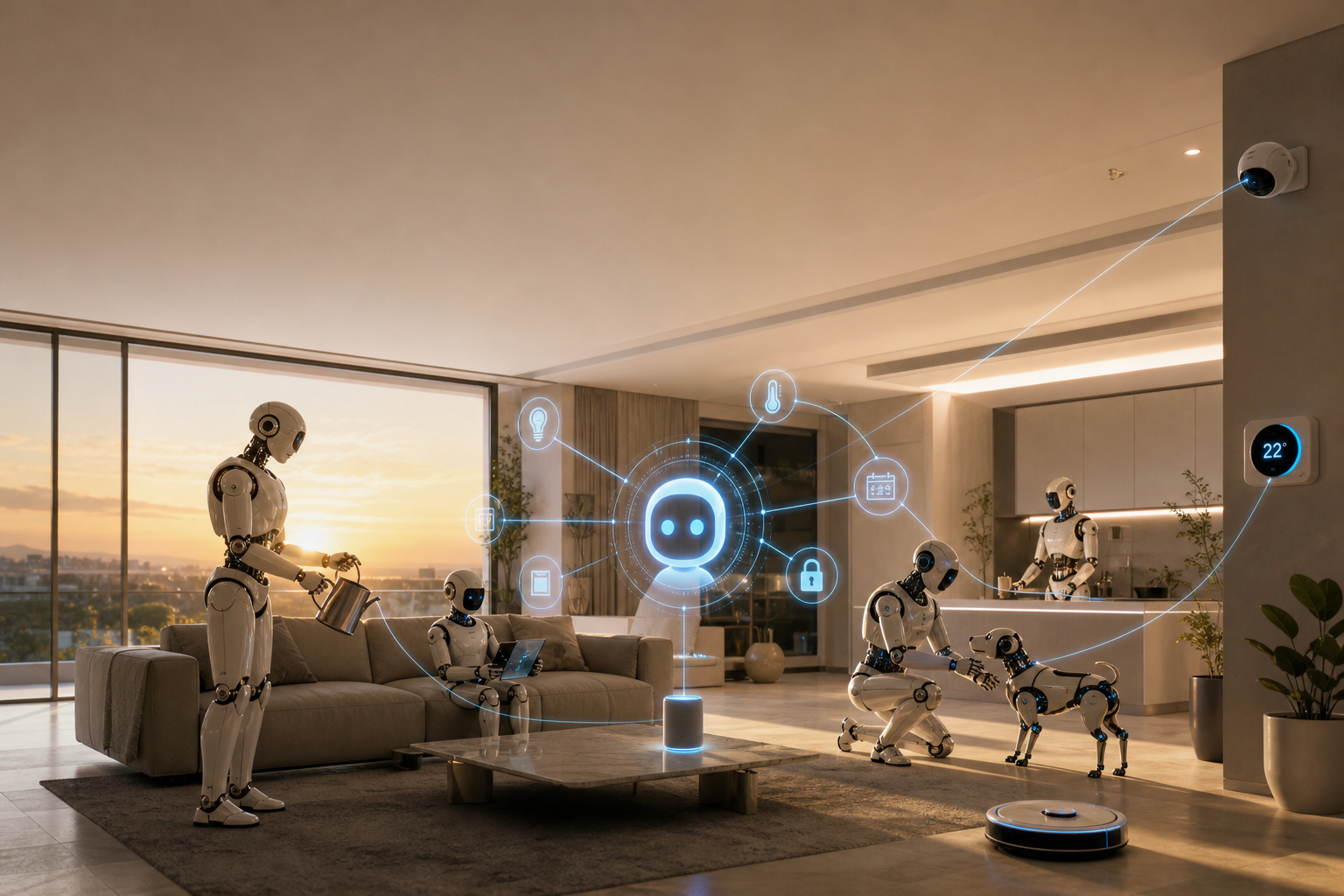
Smart home and AI combine connected devices, sensors and machine learning to create living spaces that adapt to human behavior. This article explores how artificial intelligence transforms ordinary appliances into proactive assistants, enabling energy efficiency, personalized comfort and improved safety. We’ll define the core concepts, examine the enabling technologies, and map practical use cases that deliver measurable value today. We also discuss the risks and best practices that homeowners and integrators should consider when deploying AI-driven systems. The objective is to give homeowners, property managers and product teams a clear, actionable understanding of what smart home AI does, how it works, which benefits are realistic, and what governance or technical choices influence long-term success.
What is smart home AI
Smart home AI refers to systems that use data from devices and sensors combined with algorithms to make decisions, predict needs and automate tasks without constant human input. Unlike simple automation rules that follow static schedules, AI systems learn patterns—such as occupancy, preferred lighting scenes, or thermostat adjustments—and apply probabilistic reasoning to optimize outcomes. Core outcomes include personalization (adapting to individual preferences), optimization (reducing waste such as energy), and anticipation (taking actions before a user asks).
- Personalization: Profiles and preferences learned from behavior logs.
- Context awareness: Combining location, time and device state to infer intent.
- Continuous improvement: Models retrain on new data to refine recommendations.
Core technologies and how they work
Smart home AI stacks typically combine hardware, connectivity, edge compute and cloud services. Understanding how these layers interact helps explain capability and limitations.
- Sensors and devices: Motion sensors, cameras, thermostats, smart plugs and voice assistants capture inputs.
- Edge processing: Local inference on gateways or hubs reduces latency and preserves privacy for time-sensitive tasks.
- Cloud machine learning: Aggregated data enables broader model training, federated learning and complex analytics.
- Interoperability protocols: Standards like Matter, Zigbee and Thread improve device compatibility and reduce integration friction.
Data pipelines clean and label sensor inputs, feeding models that perform classification (is someone home?), regression (predict temperature), and reinforcement learning (optimize HVAC schedules for cost and comfort). A hybrid architecture—edge for instant actions, cloud for heavy training—balances responsiveness with model sophistication.
Practical applications and measurable benefits
AI-driven smart homes deliver tangible returns across energy, comfort and security. Below are common applications and typical impacts observed in deployments.
- Energy management: Predictive HVAC control, adaptive lighting and appliance scheduling lower bills while maintaining comfort.
- Health and wellbeing: Activity analytics and environmental monitoring can support aging-in-place and chronic condition management.
- Security and safety: Intelligent cameras distinguish people from pets, detect falls and reduce false alarms.
- Convenience: Voice and gesture control plus automated routines simplify daily tasks.
| Device type | Common AI features | Estimated energy savings | Typical homeowner adoption |
|---|---|---|---|
| Smart thermostats | Adaptive scheduling, occupancy prediction | 8-15% HVAC savings | 30-40% of smart home adopters |
| Smart lighting | Ambient sensing, scene learning | 5-12% lighting savings | 40-50% |
| Security cameras | Person detection, anomaly alerts | Indirect – reduces response costs | 45-55% |
| Smart plugs & appliances | Load profiling, scheduled optimization | 3-10% appliance savings | 25-35% |
Note: savings and adoption figures vary by region, home characteristics and occupant behavior. Combining several AI systems tends to compound benefits when orchestrated centrally.
Privacy, security and adoption best practices
As smart home AI becomes more capable, responsible deployment matters. Security lapses and opaque data practices can erode trust and block adoption. Key best practices include:
- Data minimization: Collect only what is necessary and store anonymized or aggregated data when possible.
- Edge-first design: Keep sensitive inference local to reduce exposure and latency.
- Secure updates and authentication: Enforce firmware signing, multi-factor admin access and regular patching.
- User control and transparency: Provide clear settings, data export options and simple ways to pause learning.
- Interoperability planning: Choose standards-compliant devices to avoid vendor lock-in and simplify long-term maintenance.
For integrators and product teams, measure success with KPIs such as energy savings per household, false positive rate for alerts, and user satisfaction. Pilot programs that include opt-in analytics and iterative consent models tend to scale more smoothly.
Conclusion
Smart home AI moves beyond static automation to environments that learn, predict and optimize on behalf of occupants. By combining sensors, edge compute and cloud models, these systems deliver measurable benefits: reduced energy consumption, improved comfort, enhanced safety and better accessibility. Yet benefits are contingent on design choices—particularly around privacy, security and interoperability. Adopting edge-first architectures, transparent data practices and standards-based devices increases trust and total value. For homeowners and service providers, the recommended approach is pragmatic: start with high-impact pilots (HVAC, lighting, security), measure outcomes, then scale with governance controls. With careful implementation, AI can make homes more efficient, safer and genuinely responsive to human needs.