
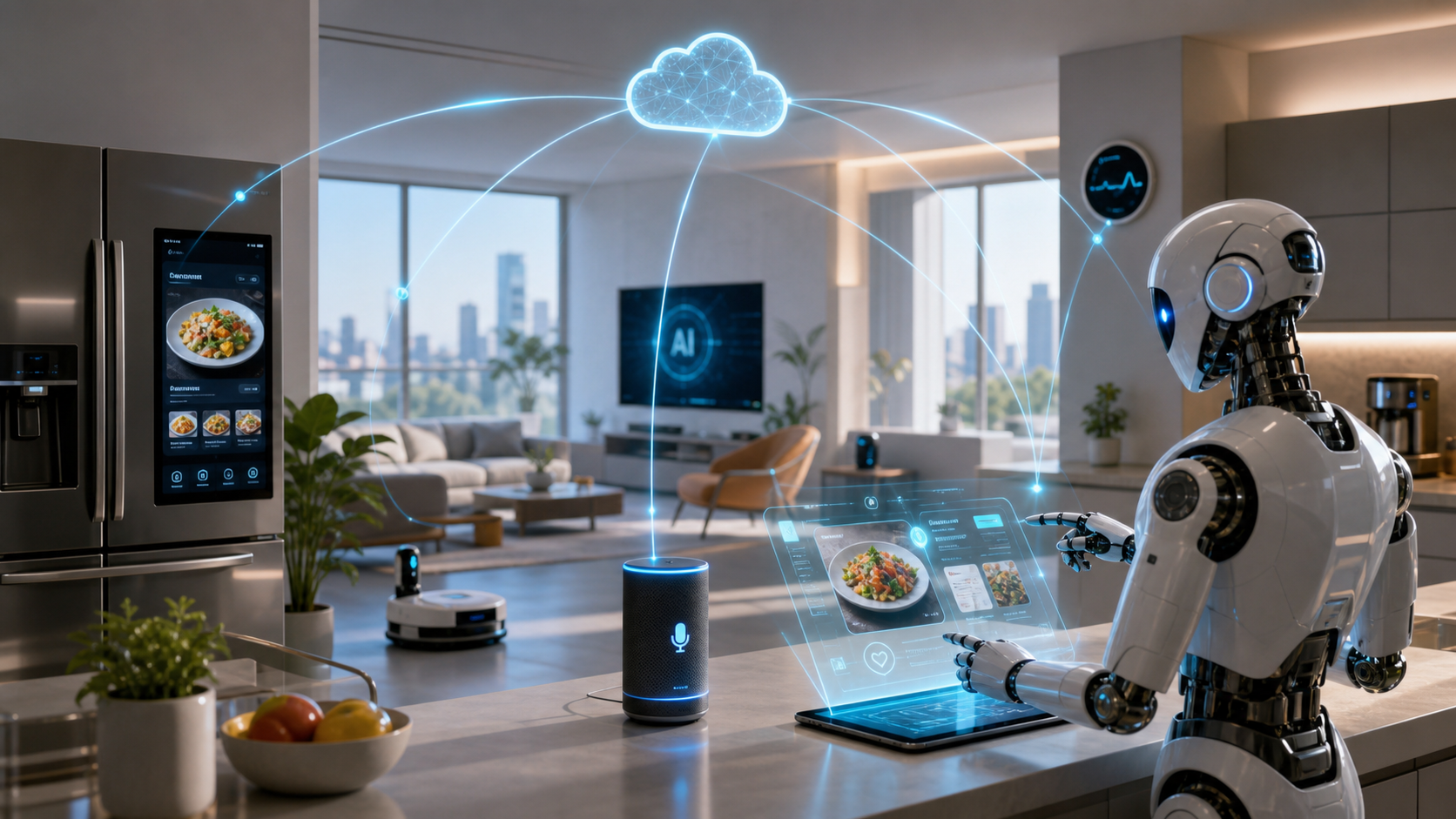
Is AI expansive to use in daily life is a question that mixes two meanings: whether artificial intelligence is broadly applicable across everyday activities and whether it is costly to adopt. This article explores both angles, unpacking what modern AI tools do at home, work and on the go, and how monetary, technical and social barriers affect their adoption. Readers will find a clear view of typical use cases, real costs versus perceived expenses, and where investments produce concrete benefits. The goal is to give practical guidance so you can decide which AI features make sense for your routine, what to expect in terms of spending, and how to balance value, privacy and ease of use when integrating AI into daily life.
What we mean by ai in daily life
Artificial intelligence here refers to software and devices that automate, augment or predict tasks using data and algorithms. Examples include voice assistants, recommendation engines, photo-enhancement features, smart thermostats, personal finance analyzers, language translation, and scheduling assistants. These systems vary from cloud-powered services you access via subscription to local, on-device tools embedded in smartphones. Understanding this spectrum matters: some AI requires continuous internet access and server-side computation, while other forms run locally and have one-time hardware costs. The level of integration determines both usefulness and cost.
Affordability and real costs
When people ask whether AI is expensive to use in daily life, they often mix purchase price, recurring fees, and hidden costs such as data usage, hardware upgrades and time spent learning. Basic AI features are widely available for free or bundled with devices. Premium capabilities, especially those requiring server-side processing or high-quality data, frequently come with subscriptions. For many consumers, the marginal cost of using everyday AI is small, but enterprise-grade or highly specialized AI can be costly.
- Upfront costs: hardware that supports AI (smartphones, smart speakers, cameras).
- Recurring costs: cloud subscriptions, API usage, premium app tiers.
- Indirect costs: increased data usage, privacy trade-offs, potential need for training or support.
Accessibility and practical applications
AI has become expansive in scope because it addresses tasks across domains. Its accessibility depends on device ownership, digital literacy and language support. Useful, low-friction applications include:
- Voice commands for hands-free control.
- Smart home automation that saves energy and time.
- Email and calendar assistants that reduce administrative burden.
- Health and fitness trackers that analyze trends and nudge behavior.
- Language translation and captioning that improve communication.
Many of these applications can be used with minimal cost or via freemium models. Adoption increases when AI demonstrably saves time or money. For example, a smart thermostat may have an upfront cost but can lower utility bills, offsetting the purchase within months to years.
Risks, privacy and future outlook
Widespread use of AI in daily life raises trade-offs. Privacy concerns, algorithmic bias, security vulnerabilities and dependency on third-party services are important to weigh. Regulation and improved design practices are addressing these issues, but users should still evaluate providers, read privacy policies and prefer on-device options when possible. Looking ahead, AI will likely become more efficient and less costly per use as hardware improves and competition drives down service fees. This trend will make advanced AI more accessible, but it will also heighten the need for digital literacy and ethical guardrails.
Cost and accessibility comparison
| AI category | Typical cost | Accessibility | Common benefit |
|---|---|---|---|
| Built-in smartphone features | Usually free with device | High | Convenience, quick tasks |
| Smart home devices | $25 to $300 one-time | Moderate | Automation, energy savings |
| Subscription AI services | $5 to $50 per month | High for consumers | Advanced features, cloud power |
| On-premise or enterprise AI | $1,000+ per year | Low for individuals | Customization, scale |
| Open-source models (local) | Free software, hardware cost varies | Moderate to low | Control, privacy |
Practical tips for everyday users
- Start small: enable one assistant feature or automate a repetitive task to test real benefits.
- Compare total cost of ownership: include subscriptions, data, and potential savings.
- Prioritize privacy: choose on-device options or reputable vendors with transparent policies.
- Monitor dependency: use AI to augment skills rather than fully replace critical thinking.
Conclusion
AI is both expansive and often affordable for everyday use. Many practical AI tools are already embedded in devices or available as low-cost services, making entry easy for most consumers. More advanced capabilities can be expensive, but their value depends on individual needs: automation that saves time or money often justifies the cost. Accessibility hinges on device ownership, digital literacy and trust in providers, while risks like privacy and bias require informed choices. Overall, adopting AI in daily life is increasingly practical—start with small, high-impact use cases, evaluate costs and privacy, and expand use as benefits become clear. With thoughtful adoption, AI can enhance routines without becoming prohibitively expensive.