
Introduction
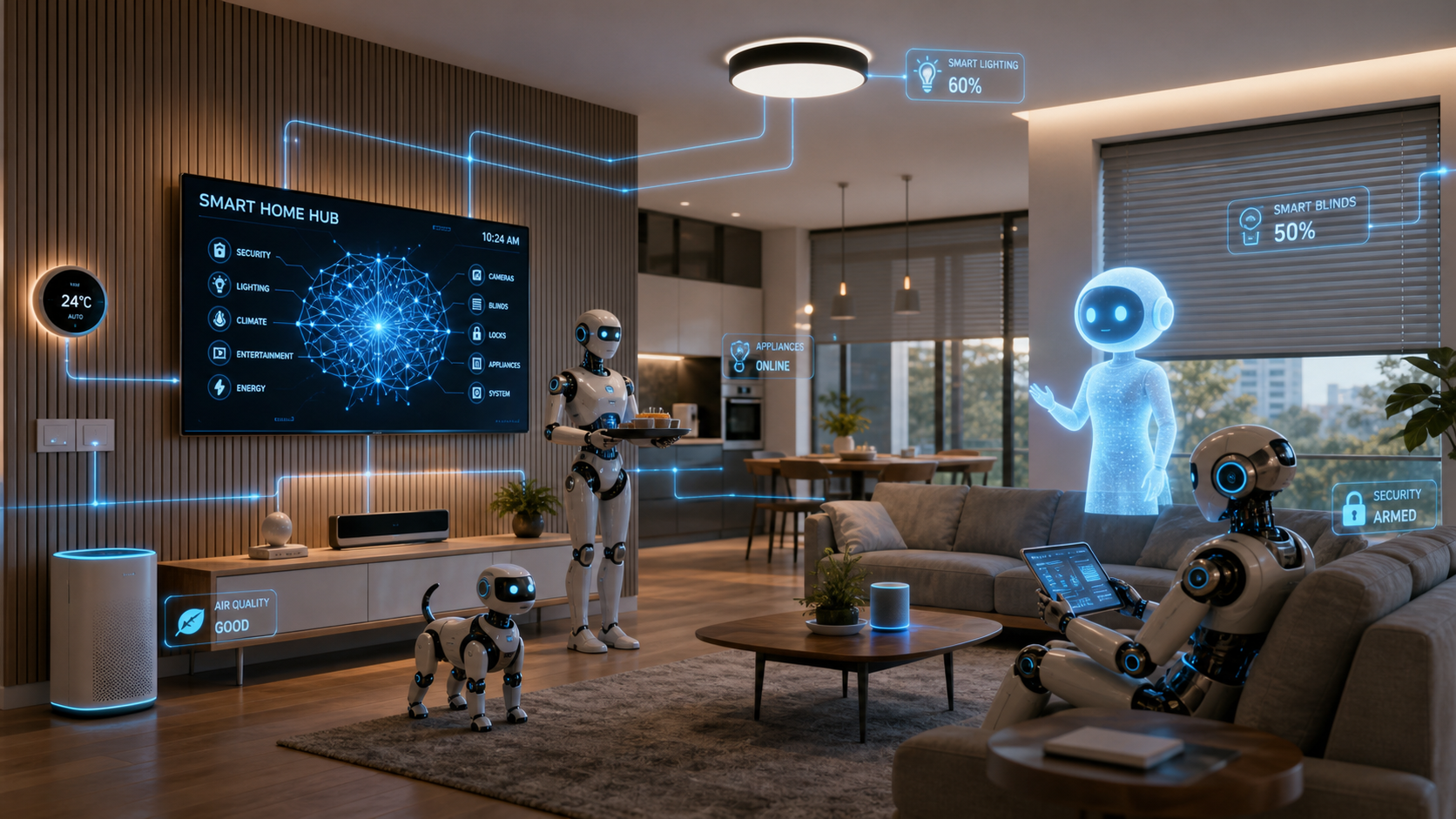
The convergence of smart home technology and artificial intelligence is transforming how we live, work, and manage everyday routines. From thermostats that learn your schedule to voice assistants that coordinate multiple devices, AI is turning isolated gadgets into an intelligent, responsive home ecosystem. This article explores how smart homes have evolved, the core AI technologies that power them, practical applications and measurable benefits, and the challenges around privacy and interoperability. It also offers practical guidance for homeowners considering AI-driven upgrades and a look at near-term trends likely to shape the next wave of connected living. Whether you are a homeowner, integrator, or product manager, this overview will help you understand the real-world implications of combining smart home systems with AI intelligence.
The evolution of smart homes
Smart homes began as single-function gadgets—remote-controlled lights, programmable thermostats and early home automation controllers. As networking improved, these devices moved from isolated units to internet-connected nodes, enabling centralized control via apps and cloud services. The real step change came when AI began to interpret data rather than simply relay commands. Instead of following static schedules, homes started to observe patterns, predict needs and adjust automatically.
This evolution is a story of three linked advances: device connectivity, cheap sensors and more powerful compute. Connectivity provides the data stream, sensors capture context, and compute—often including machine learning models—turns signals into action. Together they create an adaptive environment that can learn household preferences, reduce waste and surface new convenience features.
Core AI technologies powering smart homes
Several AI techniques form the backbone of modern smart homes:
- Machine learning and predictive analytics: models that learn occupancy patterns, optimize heating schedules and predict appliance maintenance.
- Natural language processing: voice assistants that interpret commands and carry on multi-step dialogues across devices.
- Computer vision: cameras that recognize people, detect events (for example, falls or package deliveries) and trigger context-aware responses.
- Edge computing: running models locally to reduce latency, conserve bandwidth and improve privacy by keeping sensitive data on-device.
- Reinforcement learning and control systems: systems that continuously refine actions to achieve goals such as comfort, cost reduction or minimal energy use.
These technologies interact: NLP translates a spoken intent, ML infers likely outcomes based on past behavior, and edge processors execute actions with minimal delay. Choosing the balance between cloud and edge processing affects performance, cost and privacy—an important trade-off for any implementation.
Practical applications and benefits
AI-driven smart homes deliver tangible benefits across comfort, safety and efficiency. Typical applications include adaptive heating and cooling, intelligent lighting, predictive security alerts, appliance diagnostics and personalized media. Below is a concise view of common device categories, their AI functions and typical outcomes.
| Device category | AI function | Typical outcome | Estimated adoption (2024) |
|---|---|---|---|
| Thermostats | Predictive scheduling, occupancy detection | Energy savings 10-20%* | 35% |
| Security cameras | Person recognition, event filtering | Fewer false alarms, faster alerts | 40% |
| Voice assistants | NLP, multi-device orchestration | Hands-free control, routine automation | 55% |
| Smart lighting | Adaptive scenes, occupancy sensing | Comfort and energy reduction | 30% |
| Health sensors | Anomaly detection, alerts | Early intervention for seniors | 8% |
*Energy savings depend on climate, household habits and system design. The table shows approximate adoption figures and common benefits to help prioritize upgrades.
Beyond direct savings, AI improves usability. A single routine might dim lights, lock doors and set the thermostat for bedtime—actions coordinated by predictive models that reduce friction and increase user satisfaction.
Challenges and privacy considerations
Integrating AI into the home brings challenges that must be managed thoughtfully. First, data privacy: many AI features rely on continuous data collection, creating risk if data is mishandled. Local processing can mitigate exposure, but not all devices support it. Second, interoperability: proprietary ecosystems can lock consumers into one vendor, limiting cross-device intelligence. Third, reliability and trust: false positives from security systems or incorrect health alerts can erode confidence.
Addressing these issues requires a multi-layered strategy:
- Prefer devices that offer local data processing or clear data deletion options.
- Use hubs or standards-based platforms to bridge devices from different vendors.
- Implement robust authentication, encrypted communication and regular firmware updates.
- Monitor model behavior and allow users to correct or tune automated decisions.
Regulatory changes and consumer expectations are pushing the industry toward greater transparency, but homeowners and integrators must remain proactive about security and ethical use.
Implementing AI smart home solutions and future trends
For homeowners ready to adopt AI features, a staged approach reduces risk and cost. Start with low-friction upgrades like a smart thermostat or voice assistant, then add cameras or sensors that integrate with your chosen platform. Prioritize devices that support local processing and documented APIs. Maintain a simple network segmentation strategy: isolate IoT devices on a separate network and use strong passwords and two-factor authentication where possible.
Looking ahead, several trends will reshape smart homes:
- More on-device intelligence through tiny ML and efficient models, improving privacy and responsiveness.
- Federated learning, allowing devices to improve models collaboratively without sharing raw data.
- Deeper integration with energy grids for dynamic load management and cost optimization.
- Stronger interoperability driven by emerging standards that reduce vendor lock-in.
These trends mean smarter, safer and more efficient homes, but success will depend on thoughtful design, clear user controls and ongoing attention to security.
Conclusion
Smart homes powered by AI offer clear advantages in convenience, safety and energy efficiency, driven by machine learning, NLP, computer vision and edge computing. The evolution from isolated gadgets to intelligent ecosystems depends on connectivity, sensors and compute, and the most successful implementations balance cloud capabilities with on-device processing to reduce latency and protect privacy. Practical benefits range from 10 to 20 percent energy savings in many cases to faster, more accurate security alerts and personalized comfort. However, challenges remain: data governance, interoperability and trust must be addressed through device selection, network hygiene and transparent policies. Looking forward, federated learning, tiny ML and stronger standards promise even more capable and privacy-friendly homes. For homeowners, the best path is gradual adoption: prioritize well-documented devices, segment your network and enable local processing when possible. With careful choices, AI can make homes more efficient, responsive and secure without compromising user control.